For a product you need built

Turn a business need into a product people can use.

Start with the problem, the people who face it, and the first useful result. I will help shape a bounded web product before implementation begins—you do not need to choose a technology stack.

Tangible delivery

What you receive

The engagement is described through usable outputs—not a list of development activities.

  • 01

    A usable product surface

    The agreed interface and core user flow, responsive across the target screens.

  • 02

    The essential behaviour

    The smallest set of product capabilities required for the first useful outcome.

  • 03

    A reviewable version

    Visible checkpoints so you can inspect the product before the final handover.

  • 04

    The agreed source

    Implementation in the agreed repository, with the ownership boundary stated clearly.

  • 05

    A continuation guide

    A concise handover covering what was delivered, known gaps, and the sensible next step.

Relevant evidence

Evidence relevant to a product build

Quaiz is the strongest public product example. This portfolio adds inspectable evidence of bilingual delivery and structured implementation.

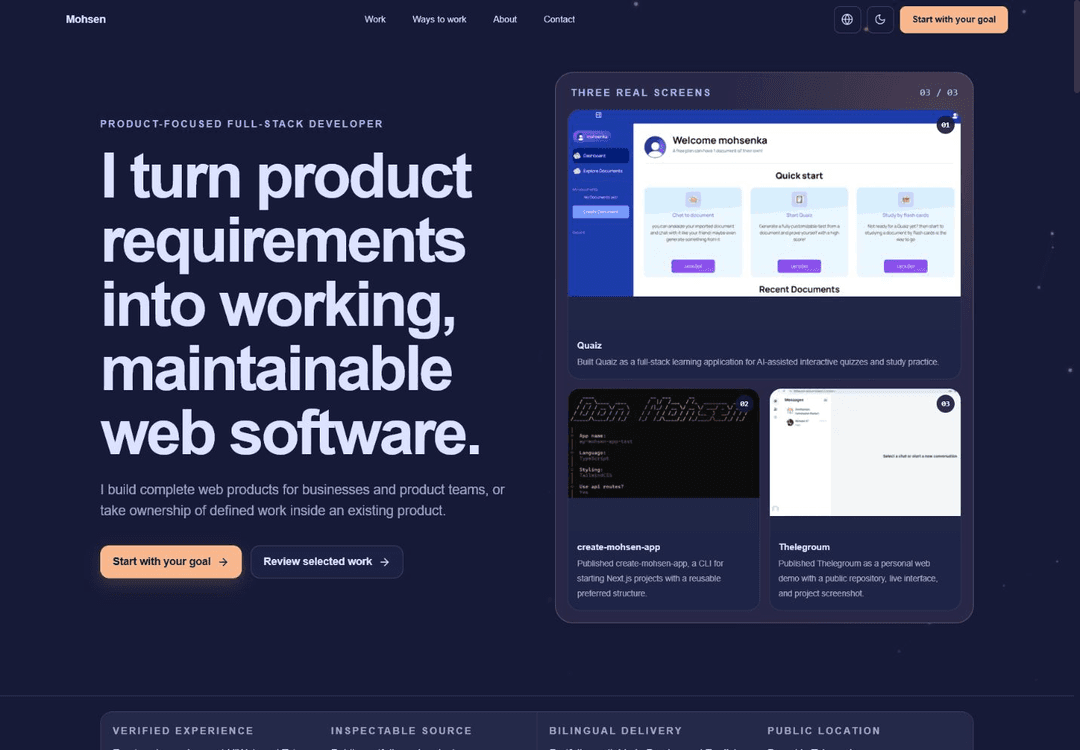
English desktop home page of Mohsen's portfolio

Verified public project

Designed and built this bilingual Next.js portfolio with audience-specific routes, project content, contact flows, and interactive planning tools.

The source of this bilingual portfolio is public and exposes the route, evidence, and content architecture used in the implementation.

Open supporting source
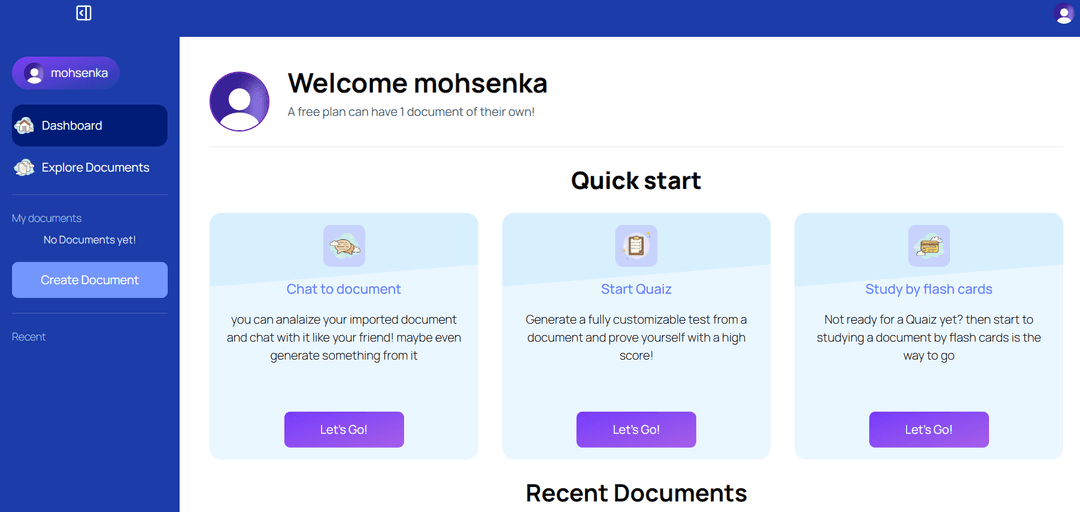

Quaiz application screen

Verified public project

Built Quaiz as a Next.js learning application for AI-assisted interactive quizzes and study practice.

A public Next.js learning product with a live URL, repository, and real product screenshot. The verified result level is Delivered—not a usage or revenue metric.

Open supporting source

A useful starting point

What I need from you

Plain product context is enough to begin. Technical architecture can be decided after the need is understood.

1The goal
What should become easier, possible, or more useful after this product exists?
2The user
Who will use the first version, and in what situation?
3The current state
An idea, an existing site, a codebase, a manual workflow, or another starting point.
4The constraints
Important timing, content, integration, language, or review constraints you already know.
5The decision owner
Who can approve scope, review the result, and resolve product questions?

Fit boundary

A useful fit—and an honest no

The boundary is part of the offer. It protects both sides from starting with incompatible expectations.

Good fit

  • A web product or website with a clear user and business goal
  • A first usable version that needs scope before implementation
  • A React or Next.js product that needs a defined feature delivered
  • A bilingual Persian and English interface

Not the best fit

  • A request with no clear user, goal, or decision owner
  • A visual copy of another product with no product context
  • Work that requires claims or results to be invented for marketing

After the CTA

What happens next

No automatic commitment and no mystery call. The context is reviewed before a next step is proposed.

  1. 1

    Share the context

    Send the five plain brief inputs. An incomplete but honest description is enough.

  2. 2

    Review fit and unknowns

    I compare the request with the evidence and identify the scope questions that matter first.

  3. 3

    Choose the next useful step

    The next step may be a tighter brief, a bounded first delivery, or an honest no-fit answer.

Choose one concrete next step

Mohsen
Mohsen
contact@mohsen.info

Tehran, Iran

نسخهٔ فارسی

© 2026 Mohsen.